Gulf Access vs. Freshwater Canal Homes in Cape Coral: What's the Real Difference?
Gulf Access vs. Freshwater Canal Homes in Cape Coral: What's the Real Difference?
By Sheri Harris, Integrity 1st Group | eXp Realty — Cape Coral, FL
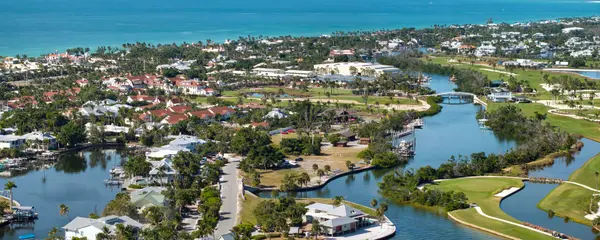
Cape Coral has over 400 miles of canals. That's more than any other city in the world, Venice included. But here's the thing most out-of-town buyers don't realize until they're already looking at listings: not all of those canals go anywhere.
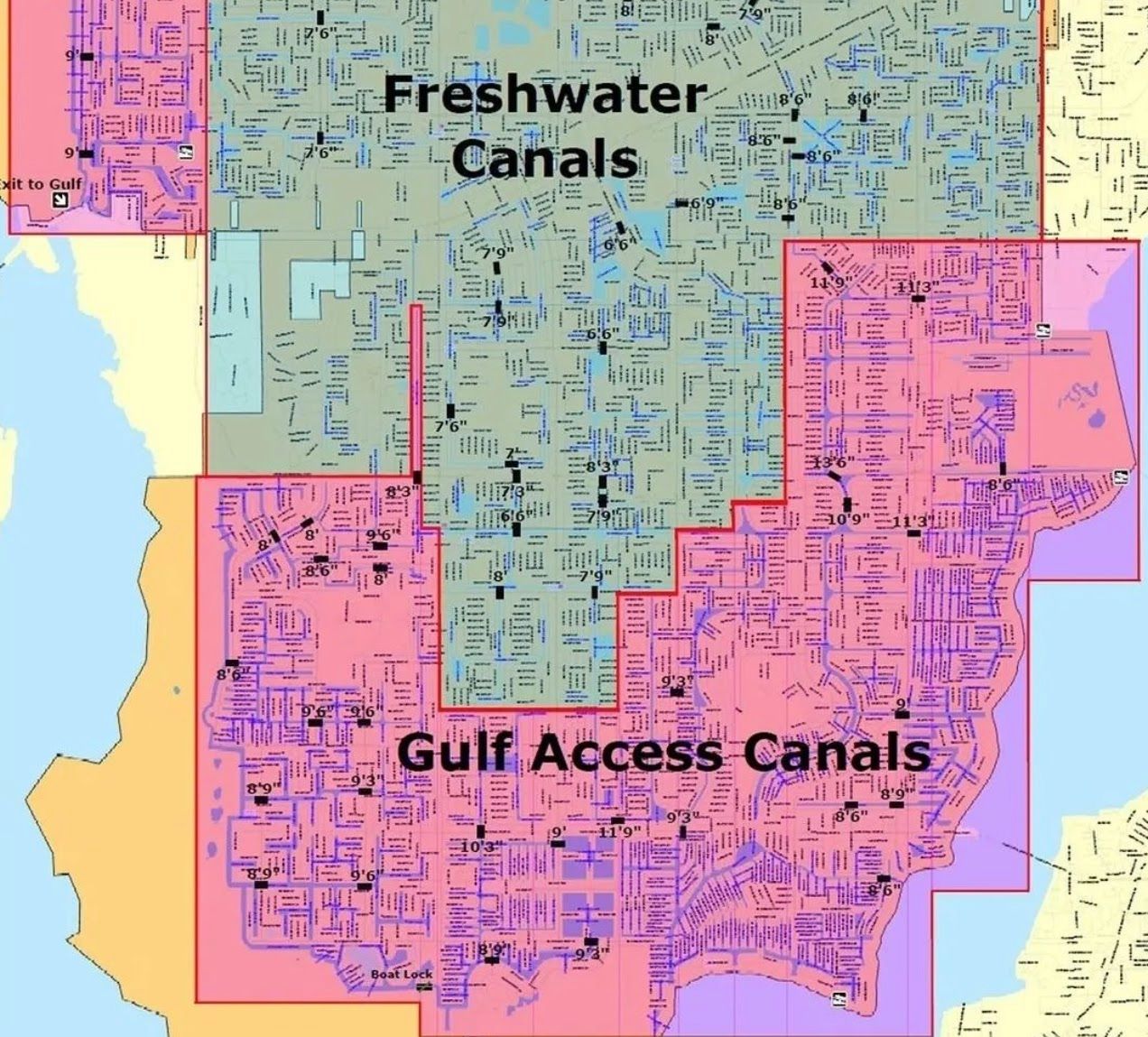
Some connect to the Caloosahatchee River and eventually the Gulf of Mexico. Others are freshwater systems that dead-end into lakes or simply loop back on themselves. The difference between the two affects everything from your home's price to your insurance bill to whether you can actually take your boat out fishing on a Saturday morning.
I get asked about this constantly, so here's the breakdown.
What "gulf access" actually means in Cape Coral
A gulf access home sits on a canal that connects, through some route, to the Caloosahatchee River and the Gulf of Mexico. But the word "access" is doing a lot of heavy lifting in that sentence.
There are really three tiers:
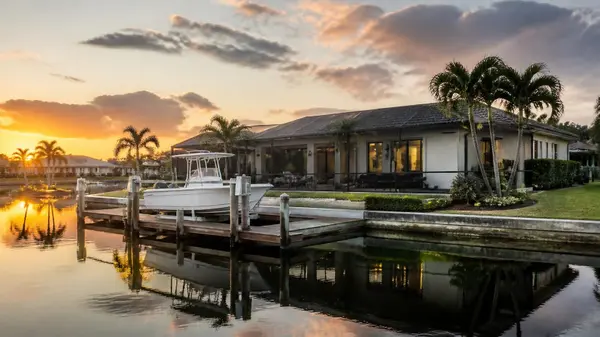
Direct sailboat access means no bridges between your backyard and open water. You can take whatever size boat you want, whenever you want. These homes are the most expensive waterfront properties in Cape Coral by a wide margin. Expect to pay $800,000 and up for a standard 3/2, and well over a million for anything with newer construction or a wide canal view. Most of these homes are in the SW and SE sections of the Cape.
Indirect gulf access (with bridges) means your canal reaches the Gulf, but you'll pass under one or more fixed bridges along the way. Bridge clearances in Cape Coral range from about 9 feet to 15 feet depending on the route. If your boat has a tall T-top or a center console with an overhead structure, you need to measure carefully. I've seen deals fall apart because a buyer assumed their 28-footer would fit and it didn't. A 3/2 on an indirect gulf access canal runs roughly $550,000 to $700,000 right now, depending on location and how many bridges are between you and the river.
Gulf access through the Chiquita Lock applies to homes in parts of SW Cape Coral where the canal system connects to the river via a boat lock near Cape Harbour. The lock itself isn't a big deal — it's free and works on a schedule — but it does add time and a step to every outing. Homes on lock-access canals are typically priced between the indirect and direct tiers.
What freshwater canals offer (and don't)
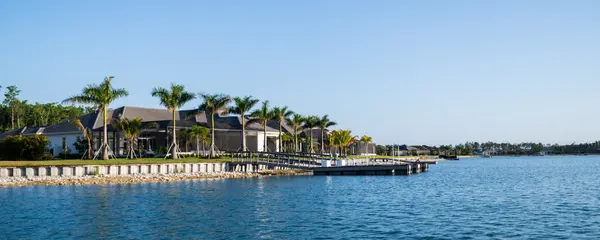
Freshwater canals are landlocked. They don't connect to the river or the Gulf. You can kayak, paddleboard, fish for bass and peacock cichlids, or just enjoy the view from your lanai, but you're not taking a center console out to Sanibel.
For a lot of buyers, that's perfectly fine.
Freshwater canal homes are considerably cheaper. A 3-bedroom, 2-bath on a freshwater canal runs roughly $390,000 to $450,000 in most parts of the Cape. That's $150,000 to $300,000 less than comparable homes on gulf access canals. The insurance tends to be lower too, since many freshwater canal areas sit in lower flood risk zones, though you still need to check your specific property's FEMA designation.
Most of the freshwater canals are in the NE and NW sections of Cape Coral. They're quieter. Less boat traffic, fewer wake issues, no worry about saltwater corrosion on your dock or seawall hardware. If you want a waterfront lifestyle without the premium that comes with boating access, freshwater is where the value is.
The price gap, in concrete terms
Here's a rough snapshot for a standard 3-bed/2-bath in Cape Coral as of early 2026:
- Dry lot (no water): $330,000 to $380,000
- Freshwater canal: $390,000 to $450,000
- Indirect gulf access (bridges): $550,000 to $700,000
- Direct sailboat access: $800,000 to $1.5 million+
Those numbers shift by neighborhood, lot size, and condition, but the relative gaps are consistent. The jump from freshwater to gulf access is where you see the biggest price increase per square foot.
Things buyers overlook
Seawall condition. In Cape Coral, you own your seawall. Not the city, not the HOA — you. Replacing one runs $150 to $250 per linear foot, and a standard lot is 80 feet wide. That's $12,000 to $20,000 for a full replacement. On older properties, this cost can sneak up on you. Always get a seawall inspection during your due diligence period, ideally from a marine contractor who can check below the waterline, not just a general home inspector.
Travel time to open water. A listing might say "gulf access" and technically be correct, but if you're 45 minutes of idle-speed canal travel from the river, that matters. The closer your home is to a canal exit point, the more you'll pay, but also the more practical it is for regular boating.
Bridge heights change with the tide. A bridge listed at 13 feet of clearance at mean high water might only have 11 feet at a king tide. If your boat is anywhere close to the limit, verify clearances at high tide, not just the number on paper.
Flood zone differences. Gulf access areas, especially closer to the river, tend to fall in AE flood zones with higher flood insurance requirements. Many freshwater canal properties sit in X zones where flood insurance isn't required by lenders (though it's still a good idea). The difference in annual premiums can be $2,000 or more, and that adds up fast over the life of a mortgage.
Canal width matters for resale. Wider canals with intersecting views command higher prices and sell faster. A 200-foot-wide canal view is a different product than an 80-foot canal, even if both are gulf access.
So which one is right for you?
If you boat regularly and want your vessel behind your house, gulf access is worth the premium. The convenience of walking out your back door, climbing onto your boat, and heading to Sanibel or Captiva without dealing with a marina is a big part of why people move to Cape Coral in the first place.
If you want a water view, a dock for kayaking and paddleboarding, and you'd rather put that $200,000 savings toward the house itself (or a much bigger pool), freshwater canals are underrated. I've had plenty of buyers start their search focused on gulf access and end up happier with a freshwater property once they saw the trade-offs.
And if you're buying as an investment, the math is worth running both ways. Gulf access homes rent for more per night on short-term platforms, but freshwater canal homes have lower carrying costs and attract solid long-term tenants who want the water view without the saltwater maintenance.
Either way, check the canal type before you write an offer. The same street in Cape Coral can have gulf access on one side and freshwater on the other. It's not always obvious from the listing description.
Sheri Harris is the Team Leader of Integrity 1st Group, brokered by eXp Realty, based in Cape Coral, FL. Her team of 12 residential agents and one commercial broker specializes in Cape Coral waterfront homes, new construction, and relocations across Southwest Florida. Contact the team at (239) 471-2550 or visit integrity1stgroupswfl.com.
Categories
Recent Posts