Moving to Cape Coral from Up North
Moving to Cape Coral from Up North: What Nobody Tells You Before the Move
By Sheri Harris, Integrity 1st Group | eXp Realty — Cape Coral, FL
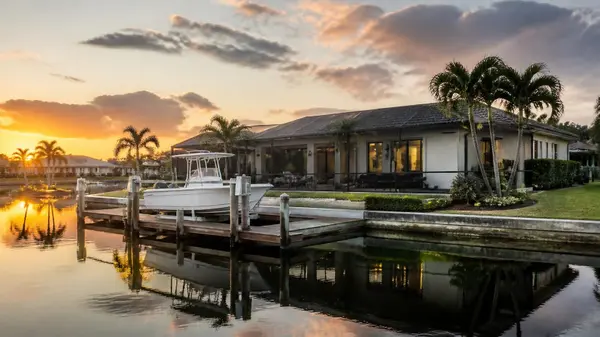
My husband Joe and I came to Cape Coral on vacation from the Northeast. We bought a house on a canal and never looked back. That story isn't unusual. A huge chunk of Cape Coral's population got here the same way — a visit turned into a house hunt, and now they're living in flip-flops year-round.
The Cape Coral metro area has been growing fast. The population topped 975,000 across the metro in 2025, up nearly 3% year over year. Most of that growth is coming from exactly where you'd expect: New York, New Jersey, Connecticut, Massachusetts, Pennsylvania, Ohio, Illinois, and Michigan. People are tired of shoveling snow and paying $15,000 a year in property taxes on a house they could only sell for $350,000.
But moving here isn't as simple as "sell up north, buy down south, save money." There are real differences in how things work, what things cost, and what you need to plan for that don't show up in the cost-of-living calculators. Here's what I wish someone had told us before we moved.
The money math isn't as straightforward as you think
Yes, Florida has no state income tax. That's real money in your pocket if you're coming from New York (where the combined state and local rate can top 12%) or New Jersey or Connecticut. For a household earning $150,000, that's $10,000 to $18,000 a year you keep.
But there are costs that go up.
Insurance is the big one. In New York or New Jersey, you might pay $1,500 a year for homeowners insurance. In Cape Coral, you're looking at $3,100 to $3,600 for a standard home, and that's before flood insurance, which runs separately. If your home is in an AE flood zone (a lot of waterfront properties are), add another $1,000 to $4,000 a year for flood coverage. Insurance is the single biggest line item that surprises relocating buyers.
Property taxes are lower, but your taxable value might be higher. Florida's homestead exemption knocks $50,000 off your property's assessed value for tax purposes, which helps. And the overall millage rate in Cape Coral is lower than most Northeastern counties. But if you're going from a $350,000 home in Long Island to a $500,000 home here, the absolute tax bill may not drop as much as you expected. Run the actual numbers for the specific property you're buying — don't estimate based on state averages.
Utility bills shift, they don't disappear. You'll stop paying for heating oil or gas heat. But you'll run your AC eight months a year. Electric bills in the summer commonly hit $250 to $350 a month for a standard 2,000-square-foot home. And Cape Coral's water and sewer rates are on the higher side because of the city's ongoing utility infrastructure expansion. Budget $150 to $200 a month for water and sewer, sometimes more depending on irrigation usage.
The housing market here is different from what you're used to
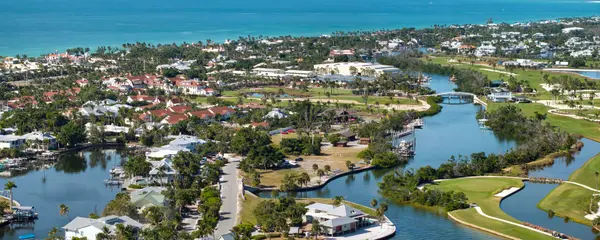
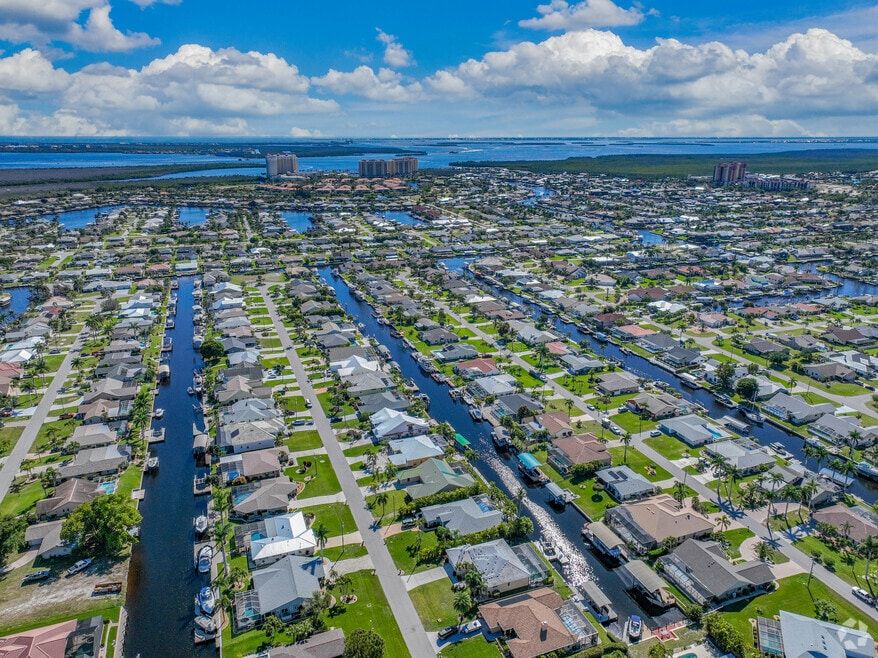
If you're coming from a market like Long Island, northern New Jersey, or the Boston suburbs, you're used to older housing stock, homes built in the 1950s, 60s, and 70s with basements, mature landscaping, and established neighborhoods. Cape Coral is younger. The city was founded in 1957 as a planned community and most of the residential construction dates from the 1980s through today. There are very few homes with basements (the water table is too high), and a lot of the housing is single-story concrete block construction with stucco exteriors.
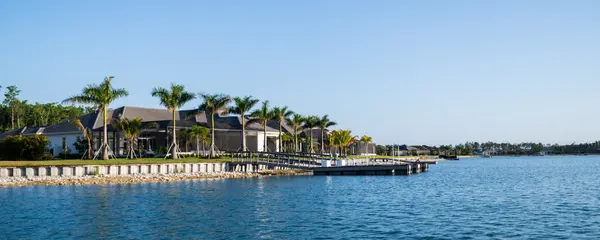
You'll also notice that many homes look similar from the outside. Cape Coral was built on a grid, and the canal lots follow that grid. The architectural variety you might be used to in older Northeastern towns doesn't really exist here. What varies is the lot — waterfront vs. dry, gulf access vs. freshwater, pool vs. no pool, cage vs. no cage. Those factors matter more to value than the house's curb appeal.
New construction is a bigger part of the market here than most transplants expect. There are entire sections of NW Cape Coral that were empty lots five years ago and are now full neighborhoods. If you're flexible on timing (builds typically take 8 to 12 months), you can get a brand-new home with current building codes, impact windows, and modern insulation for less than you'd pay for a comparable resale in the same area. And new construction almost always comes with lower insurance premiums because it's built to the latest hurricane and flood standards.
Things that catch northeasterners off guard
Hurricane season runs June through November. You're going to hear about it constantly for six months. Most seasons, nothing hits Cape Coral directly. Hurricane Ian in September 2022 was the exception, and it was devastating — Category 4 at landfall. The recovery reshaped the insurance market, rebuilt hundreds of homes, and changed the flood maps. Living here means accepting that risk and preparing for it. Get hurricane shutters or impact windows. Have a plan. Keep your insurance current. Don't panic every time a tropical wave shows up on the weather map. After your first season, you'll feel more comfortable.
You need a car for everything. Cape Coral is 120 square miles with almost no public transit. If you're coming from a place where you could walk to the deli, the train station, or the grocery store, that's over. Everything requires driving. There are no sidewalks in most residential neighborhoods. The nearest Target might be 15 minutes away. Fort Myers and RSW airport are across the river. You adapt quickly, but it's a shift.
Summer is the off-season, not winter. This trips up a lot of newcomers. In the Northeast, summer is when everything comes alive. Here it's the opposite. The busiest time in Cape Coral is November through April — "season," as locals call it. Snowbirds arrive, restaurants fill up, traffic on Del Prado and Cape Coral Parkway gets noticeably worse, and everything from dentist appointments to boat ramp parking gets more competitive. Summers are hot, humid, and quieter. Daily afternoon thunderstorms are the norm from June through September. A lot of long-term residents actually prefer summer here because the crowds thin out.
The canal in your backyard might have wildlife. Iguanas, fish, the occasional manatee in gulf access canals, and yes, alligators in freshwater canals. They're generally not aggressive and you learn to coexist. But if you have small pets, keep an eye on them near the water. This isn't something most New Yorkers think about before moving.
What to do before you list your northern home
Visit Cape Coral for at least a week before buying. Not a long weekend — a full week. Drive the neighborhoods at different times of day. Eat at local restaurants. Go to Publix (the grocery store you'll be using most). See what rush hour looks like on Veterans Memorial and Pine Island Road. A week gives you a real sense of daily life here.
Get pre-approved by a lender who works in Florida. Lending rules, insurance requirements, and closing processes are different state to state. A Florida-based lender will know what flood zone documentation is needed, how to handle the insurance escrow, and what the timeline looks like for a Cape Coral closing. If you're paying cash from the sale of a northern home, you'll still want your proof-of-funds documentation ready to go because competitive properties move fast.
Establish Florida residency strategically. This matters for tax purposes. You'll need a Florida driver's license, voter registration, and your homestead exemption filed with the Lee County Property Appraiser's office by March 1st of the year following your purchase to get the property tax benefit. Don't leave this to the last minute. Some people also file a Declaration of Domicile with the Lee County Clerk to create a paper trail.
Sell before you buy if possible. The Cape Coral market has more inventory right now than it did in 2021 or 2022, so you're less likely to lose a property by taking an extra few weeks. Buying before selling creates pressure on both ends, and contingent offers are harder to compete with in a market where out-of-state cash buyers are common.
It's worth it. But go in informed.
I say this as someone who made this exact move. Cape Coral's lifestyle is hard to beat: the weather, the water, the pace of life. But the buyers I work with who have the smoothest transitions are the ones who did their homework on insurance, taxes, flood zones, and the day-to-day realities before they fell in love with a listing. Do that legwork upfront, and you'll land here ready to enjoy it from day one.
Sheri Harris is the Team Leader of Integrity 1st Group, brokered by eXp Realty, based in Cape Coral, FL. Originally from the Northeast, Sheri and her team of 12 agents specialize in helping buyers relocate to Cape Coral and Southwest Florida. Contact the team at (239) 471-2550 or visit integrity1stgroupswfl.com.
Categories
Recent Posts